
How to Incorporate Homoeopathic Remedies into Your Skincare Routine
A homoeopath explains how to bring homeopathic remedies into your skincare routine: which remedies are used for skin, what potency means, and four easy ways to start.
Quick answer: The simplest way to bring homoeopathic remedies into your skincare routine is to choose products that already contain them in low potency, blended into a natural oil base, and to use those products every day: an oil cleanse in the evening, a face oil in the morning, and a targeted serum where you want it. Homoeopathic remedies (also spelt homeopathic) are highly diluted preparations of plants, minerals and other natural substances, chosen on the principle of treating like with like.
What Homoeopathy Brings to Skincare
Homoeopathy was founded by Samuel Hahnemann more than 200 years ago on one central idea: like cures like. A substance is matched to the person and the problem it resembles, and it is prepared by repeated dilution and vigorous shaking, a process called potentisation. The number and letter on a remedy, such as 6x or 6c, tell you how many times that process has been carried out.
The same idea shapes how we think about skin. Skin is naturally oily, so we treat it with oil: like with like. An oil base also suits homoeopathic remedies well, because it contains no water and needs no synthetic preservatives.
I have practised homoeopathy for more than 30 years, and skin has always been one of the first places where people notice a change.
Remedies Often Used for Skin
These are some of the remedies homoeopaths turn to most often for skin, and the reasons why:
Arnica montana. In homoeopathy, Arnica is the first remedy thought of for bruising and for tired, overworked tissue. In skincare it appears in body oils and eye serums.
Calendula officinalis. Calendula, from the marigold flower, is the homoeopath’s classic skin remedy, traditionally used to soothe and to support healing.
Apis mellifica. Prepared from the honey bee, Apis is associated in homoeopathy with puffiness and swelling, which is why it suits the area around the eyes.
Thiosinaminum. A remedy traditionally associated with scar tissue and marks that are slow to fade.
Silica. Long linked in homoeopathy with the strength of hair, skin and nails.
Four Easy Ways to Start
Begin with one product. An evening oil cleanse is the easiest first step. It removes the day and prepares your skin for the night, when it does most of its repair.
Choose by what your skin needs. Pick the remedy that matches your concern: Arnica and Apis around tired eyes, Calendula for skin that needs calming, Thiosinaminum for marks and blemishes.
Use it every day. Homoeopathic skincare works gently. Give a product several weeks of daily use before you judge it.
Keep the rest simple. Fewer products, fewer ingredients. A routine of three well-chosen oils does more than a shelf of ten.
If you have sensitive skin, try a little on the inside of your arm first.
What to Look for on the Label
The remedy named in full, with its potency, for example “Arnica montana 6c”.
A reputable homoeopathic pharmacy as the source of the remedies.
A short ingredient list in a natural base, with no synthetic preservatives or fragrance.
The Clil Botanicals Approach
Clil Botanicals was created by a homoeopath. Every formula starts from the homoeopathic principle of like with like and combines wild-harvested African seed oils with remedies from Helios Homeopathy pharmacy.
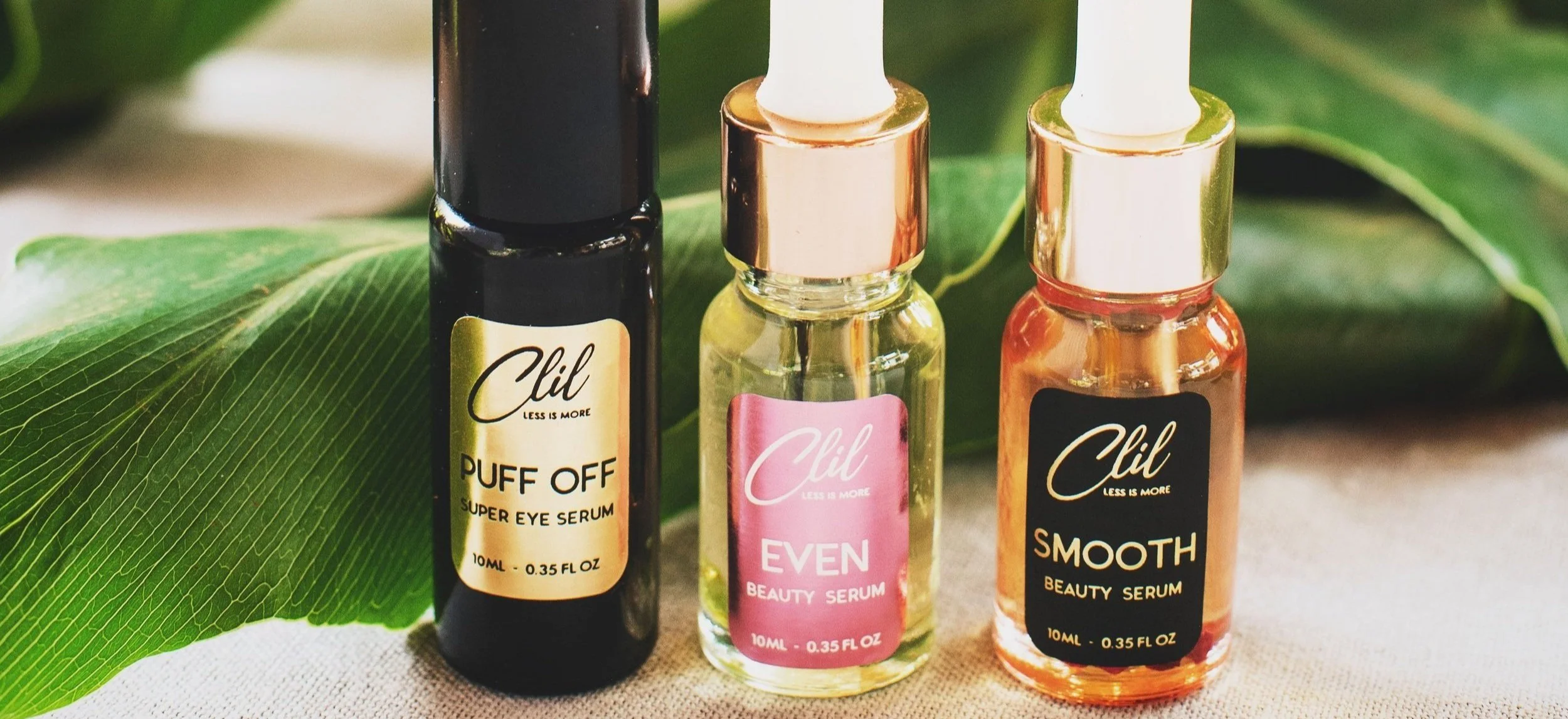
Puff Off Super Eye Serum contains Apis mellifica and Arnica montana. Spot On Blemish Rescue contains Calendula and Thiosinaminum. Our Calming Calendula & Baobab Oil pairs Calendula with baobab, and our Arnica & Lemongrass Body Oil brings Arnica to a massage oil for tired muscles.
Skincare supports the skin from the outside. For a skin problem that is persistent or severe, see a qualified practitioner, who can treat you as an individual.
Curious to try homoeopathic skincare? Explore our Clil Beauty collection to find the right oil for your skin.
The Advantages of Biophotonic Glass Bottles for Skincare Products
Discover why biophotonic glass bottles protect skincare formulas better than plastic: no microplastics, no leaching, and longer-lasting active ingredients.
Quick answer: Biophotonic glass bottles protect skincare formulas from light-related degradation better than standard glass or plastic, helping active ingredients like antioxidants and botanical extracts stay potent for longer. They’re also non-reactive, recyclable, and free of the chemical leaching risks associated with plastic packaging, making them one of the best options for preserving both product efficacy and sustainability.
Why Packaging Material Actually Matters
It’s easy to think of a bottle as just a container, but for skincare, packaging is part of the formula’s performance. Many of the most valuable active ingredients in natural skincare (plant oils, antioxidants, vitamin C, botanical extracts) are sensitive to light and oxygen. Once exposed, they begin to break down, losing potency well before the product is used up.
Standard clear glass offers almost no protection. Plastic can protect against light somewhat, but introduces its own problems, including the risk of chemical migration from the container into the product, especially with oil-based formulas, as well as growing concern around microplastics shedding into skincare products from repeated contact, friction, and UV exposure over a bottle’s shelf life.
Biophotonic glass was developed specifically to solve this problem.
What Makes Biophotonic Glass Different
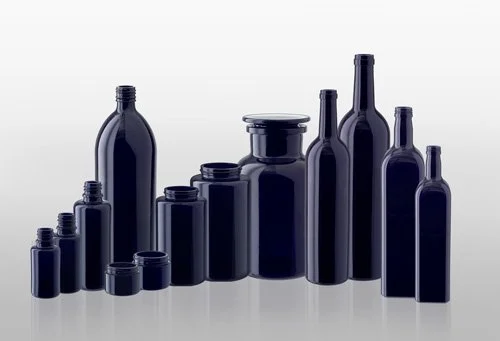
Biophotonic glass is a violet-tinted glass that filters light in a specific way:
Blocks harmful light wavelengths (the visible light spectrum) that accelerate ingredient breakdown
Allows beneficial light through, which some studies suggest can help preserve the bioenergetic properties of the ingredients stored inside
Doesn’t require added preservatives to the same degree as clear packaging, since the formula is naturally protected from one of the biggest causes of degradation
Remains non-reactive, meaning it won’t leach chemicals into the product the way certain plastics can over time
The Practical Benefits for You
Longer shelf life for active ingredients: your product performs the way it was formulated to, closer to the day you finish the bottle as it did the day you opened it
No plastic leaching or microplastic shedding: a meaningful consideration for anyone trying to minimise exposure to endocrine-disrupting chemicals and microplastic particles that can shed from plastic packaging over time, especially with repeated opening, sunlight exposure, or contact with oil-based formulas
Reusable and recyclable: glass has a far better environmental profile over its lifecycle than most plastics
Better formula integrity: especially important for oil-based and botanical products, which are more sensitive to oxidation than water-based ones
The Clil Botanicals Approach
We package our formulas in biophotonic glass because it aligns with how we think about skincare: the ingredients matter, but so does everything that touches them on the way to your skin. Choosing violet glass wasn’t just a packaging decision. It was a formulation decision. It means the African seed oils and botanical actives we source are protected from the moment they’re bottled to the moment you use them, without relying on excess preservatives or single-use plastic to get there.
If you’ve ever wondered why some natural skincare stays effective longer than others, packaging is often the overlooked reason. It’s a small design choice with an outsized impact on both product performance and environmental footprint.
Want to see biophotonic glass packaging in action? Explore our collection to find the right formula for your skin.
The Benefits of Oil-Based Skincare Products for Oily Skin
Discover why oil-based skincare can benefit oily skin — from balancing sebum production to strengthening your skin barrier. Learn which oils work best and how to use them.
As the American Academy of Dermatology notes, the goal for oily skin isn't to eliminate oil entirely, but to strike a balance between managing excess shine and maintaining the skin's natural moisture.
Quick answer: Yes, oil-based skincare products can genuinely benefit oily skin. The right oils help balance natural sebum production, strengthen the skin barrier, and deliver nutrients without clogging pores — often reducing the very oiliness people are trying to control. The key is choosing non-comedogenic, balancing oils rather than heavy, pore-clogging ones.
Why "Oil for Oily Skin" Isn't a Contradiction
It sounds backwards. If your skin already produces too much oil, why add more? But dermatologists and estheticians increasingly point to a simple truth: oily skin is often dehydrated skin overcompensating. When skin lacks moisture, it produces extra sebum to protect itself. Stripping away all oil with harsh, drying products can actually make oiliness worse over time.
The right oil-based products work differently. Instead of stripping the skin, they:
Signal to skin that it doesn't need to overproduce sebum, helping regulate oil levels naturally
Mimic the skin's own sebum structure, so they absorb rather than sit on the surface
Strengthen the skin barrier, which reduces irritation-triggered oil production
Deliver antioxidants and fatty acids that support skin health without synthetic fillers
What Makes an Oil "Good" for Oily Skin
Not all oils behave the same way on the skin. For oily and acne-prone skin, look for oils that are:
Non-comedogenic — meaning they won't clog pores or contribute to breakouts
Lightweight in texture — absorbing quickly rather than leaving a heavy film
Balanced in fatty acid profile — oils high in linoleic acid tend to suit oily skin better than those high in oleic acid, which can feel heavier
Free of unnecessary additives — fillers and synthetic fragrances can irritate reactive, oily skin
Oils like grapeseed, squalane, jojoba, and certain African seed oils are commonly recommended for this skin type because they closely resemble skin's natural sebum and absorb without residue.
How to Incorporate Oil-Based Products If You Have Oily Skin
Start small. A few drops go further than you'd expect — oily skin doesn't need a heavy application.
Apply to damp skin. This helps the oil absorb rather than sit on the surface.
Pair, don't replace. Oil-based serums work well layered under a lightweight moisturizer, not necessarily instead of one.
Watch how your skin responds over 2–3 weeks. Sebum regulation takes time; don't judge results after a single use.
The Clil Botanicals Approach
At Clil Botanicals, our oil-based formulations are built specifically around this principle: balance, not deprivation. We work with African seed oils chosen for their lightweight, non-comedogenic profiles, sourced through partnerships that prioritize both skin health and ethical, community-based sourcing. Rather than stripping the skin, our approach supports it — helping oily and combination skin find its own equilibrium over time.
If you've spent years avoiding oils because of oily or acne-prone skin, it may be worth revisiting the idea — with the right formulation, oil isn't the enemy of clear, balanced skin. It can be one of its best allies.
Curious which of our oil-based products fits your skin type? Explore our collection or reach out — we're happy to help you find the right starting point.
Where to Find Natural Skincare Products That Support Sustainable Practices
How to find natural skincare that is truly sustainable: transparent sourcing, low-impact packaging, no microplastics and fair partnerships with communities.
Quick answer: Look for skincare brands that are transparent about their sourcing, use minimal and recyclable or reusable packaging, avoid synthetic fillers and microplastics, and support the communities their ingredients come from. Sustainability in skincare spans four areas: ingredient sourcing, packaging, formulation, and social impact — and the strongest brands address all four, not just one.
Why "Natural" and "Sustainable" Aren't the Same Thing
A lot of skincare marketing uses "natural" and "sustainable" interchangeably, but they're not the same claim. A product can be made from plant-derived ingredients and still be unsustainable — if those ingredients are over-harvested, the packaging is single-use plastic, or the supply chain exploits the communities that grow them.
True sustainability in skincare means looking at the whole lifecycle of a product: where the ingredients come from, how they're processed, what they're packaged in, and who benefits along the way.
What to Actually Look For
When evaluating whether a skincare brand supports sustainable practices, check for:
Transparent, traceable sourcing — brands that name their ingredient origins and sourcing partners, not just "ethically sourced" as a vague claim
Low-impact packaging — glass over plastic, refillable or reusable containers, and packaging free of unnecessary layers
No microplastics — both as ingredients (like exfoliating microbeads) and as a byproduct of plastic packaging shedding into the product over time
Community and fair-trade sourcing — ingredients sourced through partnerships that fairly compensate the growers and communities involved, rather than extractive supply chains
Formulation efficiency — fewer, higher-quality active ingredients rather than filler-heavy formulas that require more raw material and produce more waste per use
Questions Worth Asking Before You Buy
Does the brand name specific regions or communities they source from, or only vague terms like "sustainably sourced"?
Is the packaging reusable, refillable, or made from a lower-impact material like glass?
Does the brand publish any information about its supply chain, certifications, or sourcing partnerships?
Are the formulas concentrated and effective in small amounts, or do they rely on filler ingredients that dilute both efficacy and sustainability?
Brands that can answer these clearly, with specifics rather than marketing language, tend to be the ones actually doing the work — not just claiming it.
A Note on What Your Package Looks Like When It Arrives
Here's something worth knowing before you order: your box won't be Instagram-ready. We package orders in reused cardboard, whatever sturdy materials we have on hand, and packaging that's already had a first life — not fresh, branded, color-coordinated boxes designed for an unboxing video.
That's not an oversight. It's the same principle behind the glass bottles and the sourcing partnerships, applied to the very last step of getting your order to your door. Producing brand-new packaging for every shipment, just to make it look better on camera, runs directly against everything else we do to keep our footprint small. So instead, we reuse what already exists and make sure your bottles arrive secure — even if the outside of the box has clearly lived a life before it reached you.
If you're looking for a picture-perfect reveal, this isn't going to give you one. If you're looking for a company that means what it says about sustainability, even in the parts nobody sees on camera, that's exactly the point.
The Clil Botanicals Approach
At Clil Botanicals, sustainability runs through how we source, package, and formulate. We work with African seed oil partnerships chosen for their commitment to fair, community-based sourcing. We package in biophotonic glass instead of plastic, protecting both the formula and the environment from unnecessary waste. And our formulas are built around fewer, higher-potency botanical actives rather than filler ingredients, so more of what's in the bottle is doing real work for your skin.
Sustainable skincare isn't about a single ingredient or a single claim — it's a set of choices made consistently, from sourcing to shelf. The more specific a brand can be about those choices, the more you can trust the label.
Curious how our sourcing and formulation choices come together? Explore our collection to see sustainable skincare in practice.

Skincare Brands That Empower Women in Developing Countries
Learn what real empowerment in skincare sourcing looks like, fair pay for wild-harvested ingredients, high purity standards, and honest supply chains
Quick answer: Look for skincare brands that pay fair, transparent prices for the ingredients they source and hold those ingredients to high purity standards, especially important for wild-harvested ingredients gathered across many different communities, where naming a single cooperative isn't realistic. The strongest signal isn't a polished single-source story; it's honesty about how the sourcing actually works and evidence of fair pay at the point of exchange.
Why Sourcing Is the Real Empowerment Story
Skincare ingredients like shea butter, argan oil, and various African seed oils are often harvested and processed by women in rural communities, sometimes as the primary income source for entire households. But the connection between "natural ingredient" and "empowered woman" isn't automatic, it depends entirely on how the supply chain is structured.
In extractive supply chains, the people doing the harvesting and processing see very little of the final product's value. In fair, direct-sourcing partnerships, they're paid fairly for their labor and often have a stake in the long-term relationship with the brand, not just a single transaction.
The brands genuinely empowering women aren't the ones with the best marketing copy: they're the ones that can explain, specifically, how their sourcing works.
What to Look For in a Brand's Sourcing Story
Honesty about how sourcing actually works (a named single cooperative for a cultivated crop is one legitimate model, but for wild-harvested ingredients gathered across many communities, transparency about that structure matters more than a single named source)
Fair, transparent compensation — brands willing to talk about how pricing works, not just that it's "fair"
Purity and quality standards at the point of exchange — for wild-harvested ingredients especially, this is often the most concrete, verifiable commitment a brand can make
No exaggerated claims of personal or individual relationships — be wary of brands implying they visit every village or know every harvester by name when the ingredient is wild-harvested across a decentralized network; that's rarely realistic at scale
Reinvestment or fair pricing as the mechanism of impact — even without naming individual communities, a consistently fair price paid for wild-harvested goods is a legitimate form of economic support
Questions Worth Asking
Is the brand upfront about whether ingredients are cultivated on a single farm or wild-harvested across many communities?
Can they describe how pricing works, even if they can't name every individual harvester or village?
Is the price paid consistent and fair, rather than driven down opportunistically batch to batch?
Does the brand hold the ingredient to clear purity or quality standards, as evidence of a serious, ongoing sourcing relationship?
If a brand can't answer these with any specificity, "empowerment" is likely a marketing term rather than a sourcing practice.
The Clil Botanicals Approach
Our oils, including baobab, come from a range of different communities rather than a single source. That's not a choice, it's the nature of the ingredient. Baobab trees don't grow on demand, and the oil is wild-harvested, not cultivated on a farm where output can be planned or scaled. It grows where it grows, and it's gathered by the people who live near it.
That also means we can't personally visit every village or every community involved: with wild-harvested ingredients spread across a wide, decentralized network of harvesters, that kind of direct, individual relationship isn't realistic to promise. What we can guarantee is what happens at the point of exchange: we hold the oil to the highest standard of purity, well beyond organic certification standards, and we pay a fair price for it. That's the relationship we can control, and we take it seriously — a fair price for genuinely wild, high-purity oil is a win for the harvesters and a win for the quality of what ends up in your bottle.
We'd rather be honest about the scale and structure of wild-harvest sourcing than overstate a level of individual relationship we can't actually deliver. What we can promise is fair pay and uncompromising purity, every time.
Beyond fair pricing at the point of sourcing, all our profit, after we cover our costs, goes to Homeopathy for Health in Africa, an NGO co-founded by Camilla. In that sense, Clil Botanicals functions less like a traditional skincare brand and more like a social enterprise, the products fund the mission as much as the mission shapes the products.
Real empowerment in skincare sourcing doesn't always look like a single, named cooperative and a polished origin story — especially with wild-harvested ingredients, where that kind of story isn't honest to promise. Sometimes it looks simpler than that: a fair price, paid consistently, for a genuinely wild, high-purity ingredient. It's worth asking any brand you buy from whether they can be that direct about how their sourcing actually works.
Want to learn more about the communities behind our ingredients? Explore our collection or reach out — we're glad to share our sourcing story in more detail.